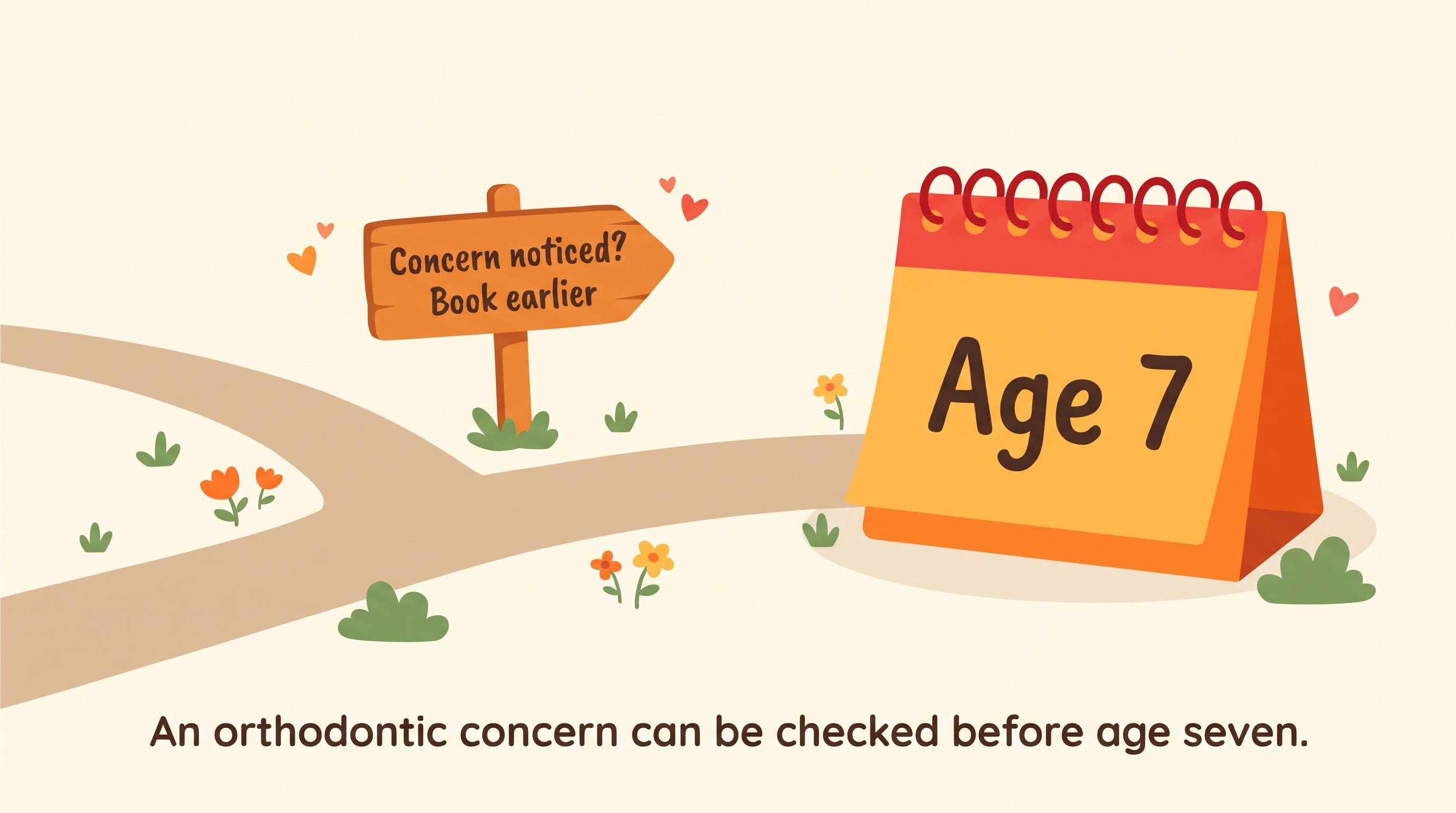
Not necessarily. If you or your child’s dentist notices a concern earlier, you can arrange an orthodontic checkup earlier. recommends a first checkup when a problem is first recognized and no later than age 7. That recommendation is about when to have an evaluation; it does not mean every seven year old needs braces.
Why is age 7 mentioned?
Around this age, many children have both baby and permanent teeth. An orthodontist can assess how the teeth are coming in, how the upper and lower teeth meet, and how the jaws are developing. Some concerns may be difficult for a parent to spot by looking at a smile alone.
Think of age 7 as a recommended latest time for a first checkup, not a starting line that every family must wait to cross. If your child is already older, you can still arrange an evaluation.
When might an earlier checkup make sense?
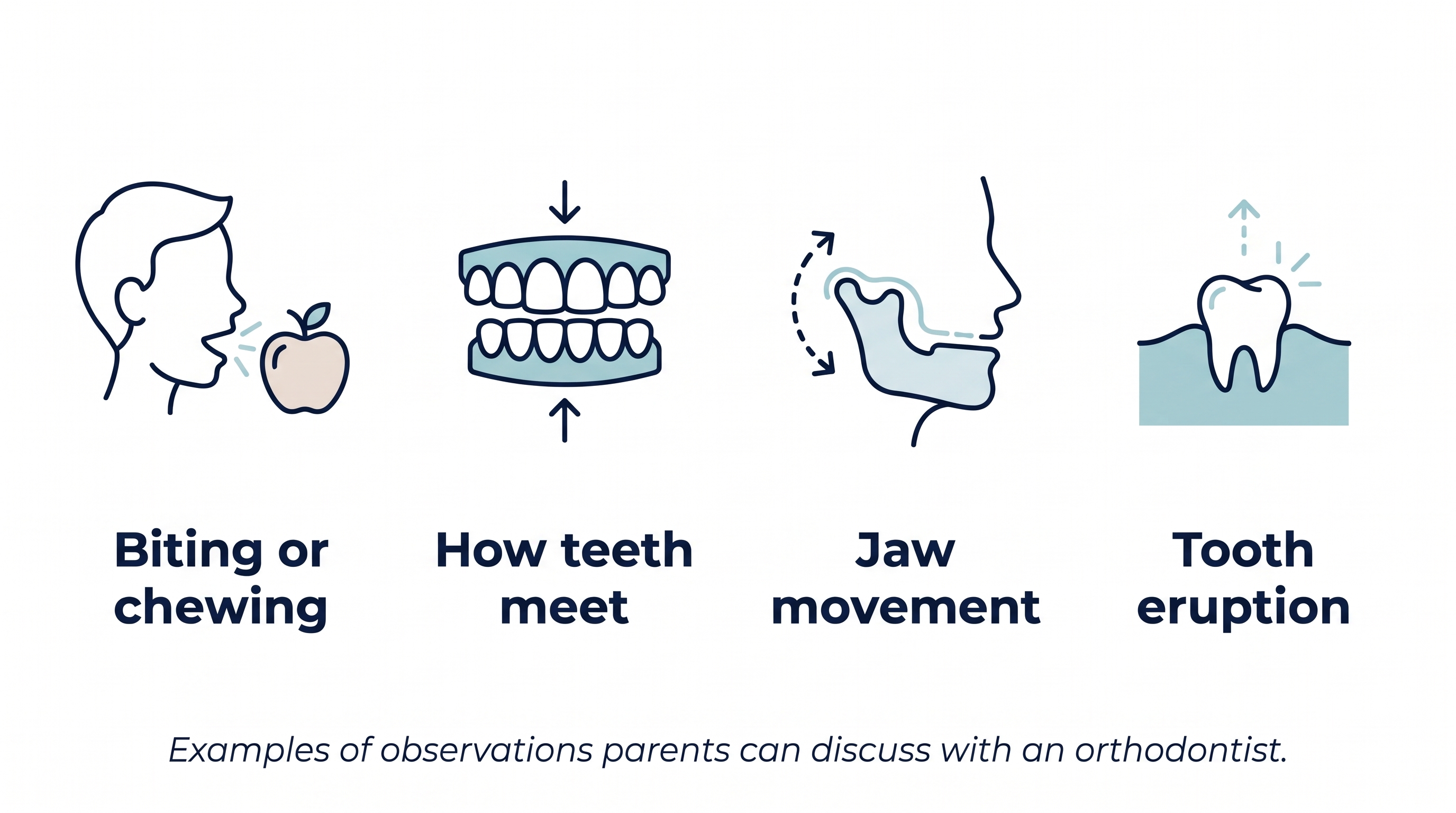
You do not need to identify or name an orthodontic condition yourself. Consider asking a dentist or orthodontist about an earlier evaluation if you notice difficulty biting or chewing, teeth that do not meet as expected, a jaw that appears to shift when your child bites, or permanent teeth appearing in an unexpected position. Baby teeth lost unusually early or late can also be a reason to ask. These are reasons to seek an assessment, not diagnoses.
Does a first checkup mean treatment will start?
Usually, the first visit is a chance to understand your child’s development. An orthodontist may find that no treatment is expected to be needed, recommend monitoring growth and tooth eruption, or discuss whether a specific developing problem could benefit from earlier treatment. An evaluation and a treatment plan are separate decisions.
What if you have already used an AI screening app?
An AI-based preliminary screening result may help you frame a question for an orthodontist, but it cannot replace an in-person examination or provide a dental diagnosis. Kedi Mobile states this limit for its Orthodontist app. A clinician’s evaluation considers the child’s teeth, bite and development, along with any diagnostic records needed for that individual child.
The practical takeaway: If you notice a concern, ask for a professional evaluation without waiting for a particular birthday. If you have no specific concern, keep the AAO’s age-7 recommendation in mind when planning your child’s first orthodontic checkup. Neither a photo nor an age alone determines whether treatment is needed. Source: AAO
Sources
- American Association of Orthodontists — Can You Get Braces With Baby Teeth? What Parents Need to Know
- American Association of Orthodontists — What Are the Benefits of Early Orthodontic Treatment?
- American Academy of Pediatric Dentistry — Management of the Developing Dentition and Occlusion in Pediatric Dentistry
- Kedi Mobile — Orthodontist app: AI pre-screening limitations
Leave a Reply